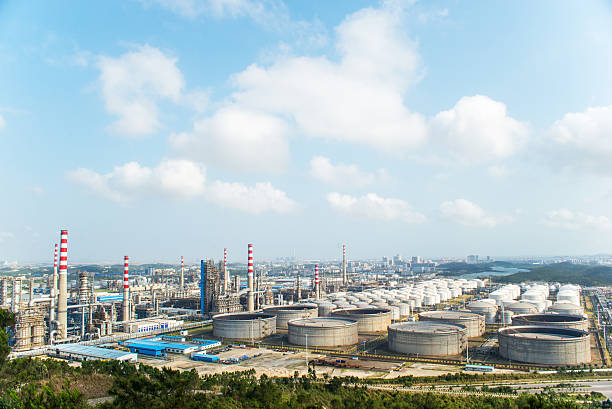
Jiangsu Shenghong Petrochemical Industry Group Co., Ltd.
As a producer rooted in the chemical manufacturing value chain, it’s impossible to ignore Jiangsu Shenghong Petrochemical Industry Group. Their transformation in the last decade has shifted not just local production capacity, but the way the chemical trade across East Asia operates. Most of us in this industry track the big investments — integrated refining-to-aromatics complexes, new purification units, advances in energy management — but few firms have set off ripple effects on procurement, logistics, and local economic patterns like Shenghong. Their decision to ramp up paraxylene production set new expectations for regional supply-demand balance. Manufacturers across the coast found themselves re-evaluating raw material sources, port arrangements, utility infrastructure, and even personnel management systems to address the new normal signaled by Shenghong’s output levels. We saw our own input costs fluctuate as domestic naphtha downstreams restructured around Shenghong’s price benchmarks. There’s no mistaking the impact direct production from a company like this brings: when new capacity comes online, everyone in the olefins, aromatics, and polyester chain takes notice. Operating at the intersection of scale, policy, and the environment is a fact of daily life for manufacturers in this sector. Shenghong’s push to maximize world-class yield per acre has drawn as much scrutiny as it has admiration. Local chemical specialists feel real pressure to match advancements in emissions controls, water re-use, and heat integration because regulators spotlight new facilities for their ability to maintain high productivity and strict pollutant-cutting standards at once. We saw firsthand how changes in waste water management and continuous monitoring meant refitting older tributary plants just to meet the precedent being set at Shenghong’s parks. This isn’t theoretical: community relations, environmental compensation costs, stakeholder communication, and technical resource investment depend on real engineering upgrades — a single slip can mean public resistance, protracted project delays, or noncompliance risks for years. Having spent years improving distillation energy savings through better heat recovery, I know efficiency isn't only about cost; it’s also about keeping operations in line with social license requirements and the ever-changing enforcement environment in China.Companies in our line of work thrive on breakthroughs in engineering, catalysis, and process optimization. For those of us running continuous reactors or developing advanced purification units, the progress made by projects like Shenghong’s, which integrate digitalization with process controls and use AI for predictive maintenance, isn’t just headline news. These innovations drop unit production costs, extend catalyst cycle length, or reduce emissions per ton output, and competitors must either adapt or fall behind. From experience, there’s a constant race to retrofit legacy hardware — whether it’s DCS (Distributed Control Systems), process analyzers, or logistics automation — to keep pace. This wave of optimization, driven by frontrunners in the field, doesn’t just improve profits, it drives the entire region toward cleaner, safer, more reliable operations. When large scale plants like Shenghong succeed at multi-feedstock flexibility, others study their approach — why waste capacity running at suboptimal loads when process design could allow swifter switches between feed streams? I’ve seen line operators and engineers retrain on new platforms, sparking internal debates about best practices and capital expenditure priorities, all because the bar keeps rising.Shenghong’s expansion has reinforced how much market structure depends on raw materials flow and value chain integration. When their PX line hit full rate, traders across Asia revised their import spreadsheets. Resin buyers considered local procurement again, and polyester producers felt both opportunity and risk: on one hand, secure long-term supply helps with export orders, on the other, price volatility climbs when one supplier’s output determines spot market sentiment. Being a producer close to these volumes, I see how global fluctuations affect production campaigns, with some lines idling or overhauling to time the market. Shenghong’s vertical integration — from refining through aromatics, all the way to downstream polyester products — set a model that smaller operators now chase. Suddenly, access to captive refinery feedstocks and economies of scale decide who can weather cycles and who sits out the next downturn. As someone who lived through both oil price shocks and anti-dumping investigations, it’s clear that scale, technology, and sharp logistics now matter as much as talent or local reputation.From a hiring and training standpoint, mega-complexes change everything. Projects of this magnitude offer opportunities for skilled technicians, chemical engineers, and automation experts unlike small-run operations in less developed regions. Their ability to attract outside talent invigorates local education programs and technical colleges. Yet, the same scale means local small-to-mid-sized manufacturers find themselves competing on both wages and work culture, as younger workers choose bigger projects with clear training pathways. On the other side, the burden falls on firms like ours to continuously raise our own game — upgrading safety programs, investment in apprenticeships, and modernization of equipment, or lose out to newer, better capitalized employers. I remember periods when the best graduates aimed for neighboring giants, and we had to fight harder for loyalty and retention.The conversation about sustainable growth isn’t abstract inside a chemical plant. There are no shortcuts: every new unit starts with questions about flare emissions, steam use, and recyclability. Watching high-profile operators like Shenghong roll out improved carbon capture, zero-liquid discharge, or bio-feedstock pilots speeds up change for everyone. Without these tangible examples, motivation to invest in next-generation environmental controls never feels urgent. It’s the difference between talking about sustainability and living it, day after day, in pump rooms and control centers. The big players force the whole field to balance profitability against environmental impact, since neither regulators nor customers accept token gestures anymore. As someone charged with keeping both local authorities and international auditors satisfied, having clear benchmarks to emulate sharpens the competitive edge.Operating in this arena means constant adaptation. Geopolitical shifts, new trade corridors, domestic consolidation, and potential overcapacity all linger on the horizon. Solutions lie in nimbleness: modular upgrades to plant infrastructure, multi-sourcing of both raw materials and technology providers, diversifying product mixes, and cooperative logistics arrangements. Real answers require collaboration both up and down the chain, learning from those on the leading edge, and never falling into complacency. From my view, embracing transparency in engineering, staying close to market signals, and prioritizing long-term talent development provides a pathway through whatever changes come next. If there’s a lesson in watching a giant like Shenghong grow, it’s that proactive change beats reactive measures every time — and the right investments in people and plant never go out of style.
Read More